 All
All
 Dobson
 Refractors
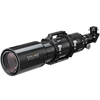 Ed & Apochromates
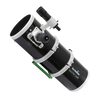 Newtonian reflector
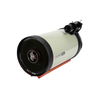 Schmidt Cassegrain
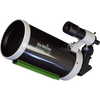 Maksutov-Cassegrain
 Solar
Solar
 Researcher
 Focal reducer
 Intelligent
 All
All
 Equatorial
 Alt/Az
 Harmonic
 Tripods
 Accessories
 All
All
 Wide angle
 Zoom eyepieces
 Reticulated eyepieces
 Barlow
 Plössl
 Binoculars
 Atmospheric Corrector
 All
All
 Visual
 Photo
Photo
 Polarisants
 Solar Filters
 Accessories
 All
All
 Color Cameras
 Monochrome Cameras
 Planetary/Guiding
 Objectives
 All
All
 Binoculars
 Spotting Scope and Monocular
 Elbows
 Optical Divider
 Mirrors
 All
All
 Bags and protections
 Supports and counterweights,
 Camera adapters
 Focuser
 Collimation
 Heating band
 Cables
 Collars
 Computers
 Fans
Fans
 Others
 All
All
 Weather Station
 Thermometer
 All
All
 Observatory/Domes
 Accessories
 Askar
Askar
 Baader
 Bresser
 Celestron
 Dwarflab
 Explore Scientific
 GSO
GSO
 iOptron
 Optolong
 ScopeDome
 SkyWatcher
 SVBony
 Touptek
 Vaonis
 Vixen
Vixen
 ZWO
ZWO

How to Choose an Astronomical Telescope: A Complete Guide for Beginners 2025
Stargazing: a dream within reach
Who has never looked up at the night sky and wondered what lies beyond the twinkling constellations? Astronomy has always fascinated people. With advances in observing instruments, exploring the Moon, the planets or galaxies is no longer reserved for scientists. However, given the variety of models, choosing your first telescope can seem like an impossible mission. This 2025 guide aims to guide beginners to make an informed choice based on their desires and budget.
1. Understanding what a telescope is
A telescope is an optical instrument designed to collect and magnify light from celestial objects, allowing us to observe them in detail. There are two main families: mirror telescopes (reflectors) and refracting telescopes (refractors). Hybrid models, such as Maksutov-Cassegrain or Schmidt-Cassegrain, combine the advantages of both technologies.
2. The main types of telescopes
The refracting telescope
Inspired by Galileo's astronomical glasses, it uses lenses to focus the light. Its closed design makes it robust, ideal for beginners. It excels in lunar and planetary observation, offering sharp and high-contrast images. However, for a large aperture, its price rises quickly.
The reflecting telescope
Invented by Isaac Newton, it relies on a primary mirror that collects the light, which is then reflected to a secondary mirror. This system offers larger diameters at reduced cost, favorable for observing faint objects such as galaxies and nebulae. On the other hand, it requires regular maintenance (collimation and cleaning).
Catadioptric telescopes
These instruments combine mirrors and lenses to obtain a compact and versatile telescope. The Schmidt-Cassegrain or the Maksutov-Cassegrain are particularly appreciated by amateur astronomers seeking a portable device without sacrificing image quality. They are suitable for both observation and astrophotography of the night sky.
3. Essential criteria for a good choice
The diameter: the key to light
The diameter of the telescope, that is, the size of the main lens or mirror, determines the amount of light captured. The larger it is, the easier the observation of faint objects. For a beginner, a diameter between 90 mm and 150 mm is a good starting point.
The focal length and the f/D ratio
The focal length corresponds to the distance light travels inside the telescope. The ratio between the focal length and the diameter, called f/D ratio, influences the type of observation: a small f/D (like f/5) is excellent for wide fields of stars, while a higher f/D (like f/10) is better suited to detailed planetary observations.
The mount: stability above all
A sturdy mount is essential to avoid vibrations that hinder observation. The two main types are:
- Azimuth mount: easy to use, ideal for beginners and visual sky viewing.
- Equatorial mount: more technical, it allows compensating for Earth's rotation and is essential for astrophotography.
The observing site and portability
The best telescope is the one you use most. If you live in a city, a compact instrument easily portable to darker areas is preferable. Those who have a stable garden can opt for a larger model or motorized tripod.
4. Essential accessories
A good telescope deserves a few handy companions: eyepieces to vary magnifications, Barlow to multiply them, lunar filter to protect vision, and perhaps a red dot finder to facilitate locating stars. A guide or sky chart – or even a mobile application – will enrich your nocturnal discoveries.
5. Telescope or binoculars?
Binoculars are often an excellent first step toward astronomical observing. Their wide field and ease of use allow you to become familiar with the sky without technical constraints. Many amateur astronomers started with them before moving on to the telescope.
6. 2025 Trends: technology and accessibility
Recent models increasingly integrate innovations: assisted motorization, automatic tracking of celestial objects, control applications via a smartphone. Some even offer automatic recognition of constellations, making sky discovery more intuitive than ever. These advances make astronomy accessible to everyone, from curious children to enthusiasts seeking images of distant galaxies.
7. Practical tips
- Start by observing the Moon, always spectacular and easy to spot.
- Avoid nights that are too windy or areas affected by light pollution.
- Take the time to properly align and balance your mount.
- Note your observations: keeping a notebook or photographing the sky helps you progress.
Conclusion: an infinite journey starts here
Choosing a telescope is not only a matter of technique, but a doorway to wonder. Whether it is a simple refractor or a more sophisticated telescope, every observation brings you a little closer to the universe. Patience, curiosity, and consistency will be your best allies. The sky, for its part, remains faithful to the rendezvous, each night offering a new spectacle to behold. Perhaps one evening, your telescope will capture the light of a star born long before humanity — and all of this will begin with the right instrument choice.